Keeping the Revenue Panic at Bay: Why Clear Income Records Make Self-Employment Less Stressful
There is a moment familiar to almost every solo business owner in Ireland. You are going about your day, juggling appointments and messages, when a brown envelope arrives with the kind of authority only government stationery can achieve. Even before you open it, your stomach drops. The worry is rarely about doing something wrong. It is about not being entirely sure what you earned, what you submitted, or whether something slipped through the cracks during a busy season.
This is the part of self-employment nobody puts on Instagram. You can love your work, love your clients, and be brilliant at what you do, yet still feel a quiet dread when tax time rolls around. The modern reporting system does not make that feeling any easier. Banks share information automatically. Payment platforms file annual summaries and report earnings. Revenue’s systems have become more connected, not because anyone is targeting the self-employed, but because transparency has become standard across the financial world.
For someone working alone, this shift creates a practical challenge. If your own records are scattered, incomplete, or buried under the mental clutter of running a business on your own, the numbers held by Revenue may look more accurate than the ones you were hoping to rely on. That is where the anxiety begins. Not in wrongdoing, but in uncertainty.
The Hidden Cost of Disorganised Income
Most solo providers are not sitting on piles of unrecorded earnings. They are sitting on piles of unrecorded admin. When you work alone, the priorities are obvious. You focus on the client in front of you. You follow up with the person who has been waiting. You squeeze in the appointment that ran over. Every day is a small balancing act.
The problem is that income doesn’t arrive in a single tidy stream. A morning client books with an online deposit and settles in cash.. The afternoon client pays with cashless. Someone slips cash into your hand on the way out. A new customer messages you on WhatsApp. The numbers scatter before you even realise it. Months later, when your accountant asks for records or Revenue sends a reminder, you are left stitching together a financial quilt that never quite aligns.
This is why so many self-employed people dread preliminary tax. If your income varies throughout the year, estimating what you owe for the current year while filing for the previous year becomes a form of educated guesswork. Some people overpay to be safe. Others underpay and hope for the best. Neither feels particularly reassuring.
Why Income Visibility Matters More Than Ever
The real shift business owners are feeling today has nothing to do with new penalties or harsher rules. It is the gap between what financial institutions now report automatically and what business owners have the capacity to track manually. Revenue is not asking small businesses to become accountants. They are simply matching information that already exists. If the numbers do not match, the system assumes something is missing.
The good news is that most of this anxiety fades when your own records match the real activity in your business. Consistent, simple income tracking does more than keep you organised. It gives you confidence. It lets you breathe. It removes the sense that you are always one step behind.
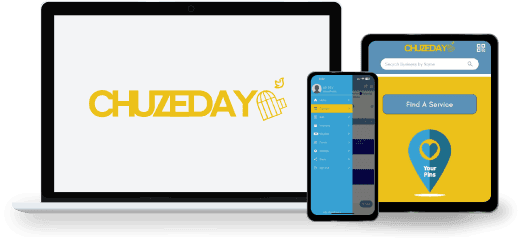
This is also why tools like Chuzeday were created. Not as a replacement for accountants or tax software, but as a safety net for the part of the process that most people struggle with: keeping track of what you earned on any given day, across every type of payment, without needing a spreadsheet or a spare hour you don’t have.
The Role Chuzeday Plays in All of This
Chuzeday does not try to handle the technical side of tax season. That territory is better left to the people who enjoy spreadsheets in a way most of us never will. What Chuzeday does very well is help you build clean, usable records without thinking about it. Every booking sits beside the payment that followed. Every transaction is logged in one place. The information you need for tax season is created naturally as you work.
For many people, this is the difference between hoping their records make sense and knowing they do. You can open your dashboard and see what your year has looked like, not in abstract terms, but in actual appointments, payments and discounts where you gave them. If something is missing, you notice it when it is still easy to fix. If your accountant asks for evidence of income, you have it without needing to dig.
This clarity also makes preliminary tax less dramatic. When you can see your income trend throughout the year, your estimate becomes more realistic. You stop guessing. You start planning. You know when a quiet month will matter and when a busy season has changed the shape of your year.
The Practical Benefits Nobody Talks About
There is a deeper emotional benefit to this kind of clarity. Self-employment already requires steady nerves. You make your own decisions, set your own hours, and carry the full weight of your work. The background anxiety around finances does not need to add to that. When your income is easy to understand, the rest of your business becomes easier too.
You can price your work more confidently because you actually know what you are earning. You can decide whether you can take a week off without working overtime to make up for it. You can see which services are carrying your revenue and which ones are creating more work than worth.
This is the kind of practical insight that helps a solo business owner grow sustainably, not recklessly. It is the kind of insight that protects you because you want to run a real, grounded, legitimate business that reflects the effort you put into it.
A Better Way Forward for Solo Providers
None of this requires a degree in finance. It does not require mastering accounting software or building a dashboard with graphs you do not understand. It requires one thing: a place where the pieces of your business come together in a way you can trust. For many people, that place is Chuzeday, not because it covers every financial base, but because it supports the part of the process that tends to fall apart first.
When your income is recorded clearly, everything else becomes easier. Your accountant breathes a sigh of relief. Your tax season becomes predictable. Your decisions become informed. And you get to focus on the work you actually enjoy.
Self-employment will always involve a few unknowns. Your income does not have to be one of them. Chuzeday helps you replace guesswork with clarity, and clarity with confidence, so the next time a brown envelope arrives, it feels like another piece of admin rather than a warning sign.