Admin Burnout Isn’t Your Fault. It’s a System Design Problem.
Solo business owners are often told that burnout is a personal failing dressed up as poor discipline. The prescription is predictable: wake up earlier, sharpen your priorities, install another productivity app, drink better coffee, and soldier on. That advice treats the symptoms while ignoring the architecture underneath. Most admin burnout is not a character flaw. It is the inevitable outcome of a system that was never consciously designed, then asked to carry the weight of a growing business.
The Silent Tax Of Mental Load
If you run a business on your own, the work you can point to is only half the job. The other half lives in your head. It is the running list of what to chase, who to invoice, which document needs an update, and where the renewal email went. Psychologists call this “working memory”, and it has limits. When your admin lives across email, a notes app, a spreadsheet, and a set of rituals you promise you will formalise later, you are paying a silent tax every hour. You spend time remembering what to do and where to find things before you can do the thing itself. That overhead feels like pressure because it is pressure. It is the cognitive equivalent of carrying shopping bags up the stairs one at a time.
The cost shows up in odd places. You procrastinate on small tasks that should be quick. You answer emails reactively and discover later that the real work now has less time than it needs. You lose the thread of a conversation because the supporting information sat in a different tool and you did not have it open when you needed it. Over a week, nothing looks disastrous. Over a month, you can feel yourself slipping into survival mode.
Why Time Management Advice Falls Short
Time management assumes a stable process. It works best when the steps are known, the tools are coherent, and the information lives where it is supposed to live. Many solo business owners have the opposite. Their systems are a museum of good intentions: a calendar that holds appointments but not preparation tasks, a to-do list that knows the task but not the file, an inbox that contains both sales leads and reminders to order printer ink.
This is why neat techniques often fail in the wild. Blocking time on your calendar does not help if the resources for the task are scattered. Prioritisation frameworks cannot fix the fact that you need three logins to assemble a simple invoice. The problem is less about when you work and more about the friction built into how work moves from trigger to completion.
What Good System Design Actually Does
A well-designed admin system reduces choices. It removes ambiguity about where an item lives, what the next step is, and how to get from here to there without backtracking. It ties information to the moment it is needed. It avoids creating second jobs where you manage the work about the work.
There is nothing glamorous about this. It looks like linking your booking tool to your invoice template so invoice creation happens as a consequence of scheduling, not as a separate task that competes for attention. It looks like giving each client a single home for files, notes, and status so that updates do not require a scavenger hunt. It looks like writing down the three or four steps for routine tasks and putting them where your future self will actually look. The goal is not more software. The goal is fewer decision points.
A Practical Way To Start
You do not need to rebuild everything; you just need to begin with a simple map of your current admin stack. List the tools and manual habits that carry your work from first contact to money in the bank. For each step, note where information is stored and what triggers the next action. This is not an audit for the sake of neatness. It is a way to surface the points where you lose time or attention.
Next, look for one overlap and one gap. An overlap is where two tools perform the same role. A gap is where you rely on memory for a step that recurs. Close one of each. Replace the memory step with a prompt or automation that lives where the work lives. Then address a single high-friction handoff. If booking a meeting never nudges invoicing, connect them. If finishing a project does not prompt a testimonial request, add a lightweight reminder tied to the final deliverable folder. Resist the temptation to overhaul everything at once. The aim is dependable flow, not novelty.
Finally, schedule a short review. Systems drift. New offers, new clients, and seasonal rushes all tug at the edges. A quarterly check keeps entropy from winning. You do not need a ceremony. You need an hour to ask whether the path from trigger to completion is still the shortest one you can reasonably maintain.
What Chuzeday Does Differently
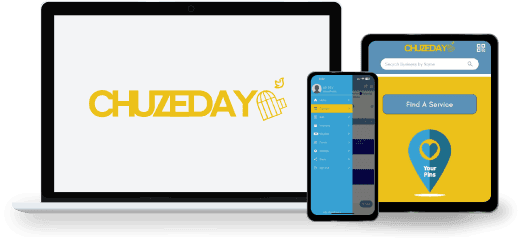
Most solo owners do not need more tools. They need fewer places to think. Chuzeday gives you a single, clean workspace where the core admin jobs live together, so the work moves without you having to shepherd it from one app to another. Instead of patching your current stack, you step into a dashboard that already has the essentials arranged for how a one-person business actually runs. Booking leads to billing without a separate chase. Tasks sit with the related client notes and files, so context is built in. Reminders appear where the action happens, not in a distant list you will forget to open. The promise is simple: fewer steps, fewer tabs, fewer decisions about where to put things and how to find them later.
This approach matters because it trims the mental load explained above, not just the visible clicks. When you stop remembering which tool holds which piece, you free up working memory for the work that earns revenue. You operate from one place, learn one rhythm, and let the platform carry more of the routine.
The Point And The Choice
Admin burnout is often blamed on discipline, yet most of it comes from systems that grew by accident. That is a design issue, and design problems respond to cleaner architecture. You can wrestle your existing stack into shape, or you can choose a platform that removes the stack as a problem in the first place. Chuzeday is built for the second path. By putting the daily mechanics of a solo business in one place, it shortens the distance between intention and outcome and lets you run the company you set out to build, not the collection of tools you assembled along the way.
With Chuzeday, you work smart, not hard. And that’s what modern solo business is all about.
Ready to Organize, Automate, and Thrive?
LEARN MORE WITH OUR BONUS MATERIALS Click Here Now
We know that trying new software can feel overwhelming, but getting started with us is quick and hassle-free. Plus, our team is here to support you every step of the way!
Click here on the link to Book a Free Discovery Call!!
Here’s to your success!
Deborah